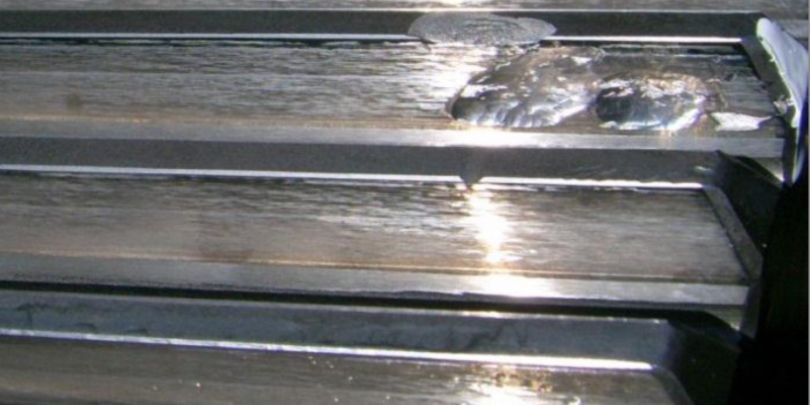
At first glance, ‘seizing capacity’ is a strange term. If you’re now thinking of food intake, being overweight or diets, you’re unfortunately completely mistaken. The term is purely technical in nature and refers to the behaviour of gear wheels in machines and gearboxes that are subjected to constant high loads, as well as the appropriate lubricants to prevent ‘seizing’ in the long term.
In engineering, ‘seizing’ refers to the localised welding together or tearing apart of two machine parts – in this case, gear wheels – that slide against one another, due to insufficient or faulty lubrication. It usually occurs at peaks of surface roughness at the points of tooth contact. The cause lies in very high temperatures – also known as ‘flash temperatures’ – which depend on the load, the circumferential speed and, not least, the temperature of the oil sump environment.
Tried-and-tested coatings, such as phosphating or metal-containing hydrocarbon alloys with tungsten, have proved in practice to be the most suitable for protecting gear flanks against excessive wear. However, it is not only the material and design of the moving parts that are crucial for the reliable operation of gearboxes, but above all the lubricant used. If the composition of the base oils and additives used is incorrect, the lubricant will not develop the required lubricating film thickness and will therefore fail to achieve the necessary wear resistance. The result is partial damage to the gears, which, in the absence of proper maintenance and inspection, ultimately leads to total failure of the gearbox and, consequently, the machine.
Hot galling causes galling marks and scoring due to very high sliding speeds and the resulting critical temperatures, particularly when the gear material and the lubricant are not optimally matched. This can be remedied by using smaller modules and, when overhauling the gearbox, by using EP oils with chemically active additives. Cold seizing refers to grooved wear on the gears with very heavy material removal, caused by low circumferential speeds. In this case, a more precise gearing, a smoother surface on the tooth flanks or a more viscous lubricant tailored to the requirements can help.
There are various institutes and research centres in Germany that carry out wear tests on gear wheels. For this purpose, there are test benches – known as gear stress testing machines – which, in accordance with the DIN 51354 standard, allow for precise adjustment of the loads in the gear meshing, as well as the temperature of the respective lubricant. The oil supply can be provided via injection or by immersion lubrication.
The Research Centre for Gears and Gear Design at the Technical University of Munich (FZG) has developed a test rig that can be used to test the viscosity and suitability of gear lubricants for preventing seizing of the surfaces and flanks of gears. The FZG test rig has established itself as the standard test machine and is also used in this form by other institutes.
The tests themselves are carried out under varying conditions. The peripheral speed, the gearing and direction of rotation of the gears, as well as the sump oil temperature, are varied in order to define the damage severity levels of different lubricants.
The FZG can assess wear resistance using four test procedures. The standard wear test is carried out in accordance with the DIN 51354 standard mentioned above, whereby the load levels are initially set low and then gradually increased, as are the flash temperatures. In the accelerated galling test, the peripheral speed is doubled, thereby significantly increasing the flash temperatures. However, the run-in phase at the lower load levels corresponds to that of the standard galling test. In the step test, the direction of rotation of the gears is reversed and a gear pair with a narrower pinion is selected. These altered conditions increase the pressure and make it even more difficult for the lubricant used to penetrate the tooth contacts. The test concludes with what is known as the ‘jump test’. Here, the loads are not increased gradually but are set directly and immediately to a specific load level. The result is either ‘Pass’ or ‘Fail’ – it either works or it does not. In the step test, there is also no run-in phase; this means that the flash temperatures reached are higher and are caused by rough surfaces. However, when used in gearboxes, the lubricant must possess certain running-in properties in order to increase the gear’s resistance to galling. Therefore, for every galling test, the individual boundary conditions must be closely monitored and documented.